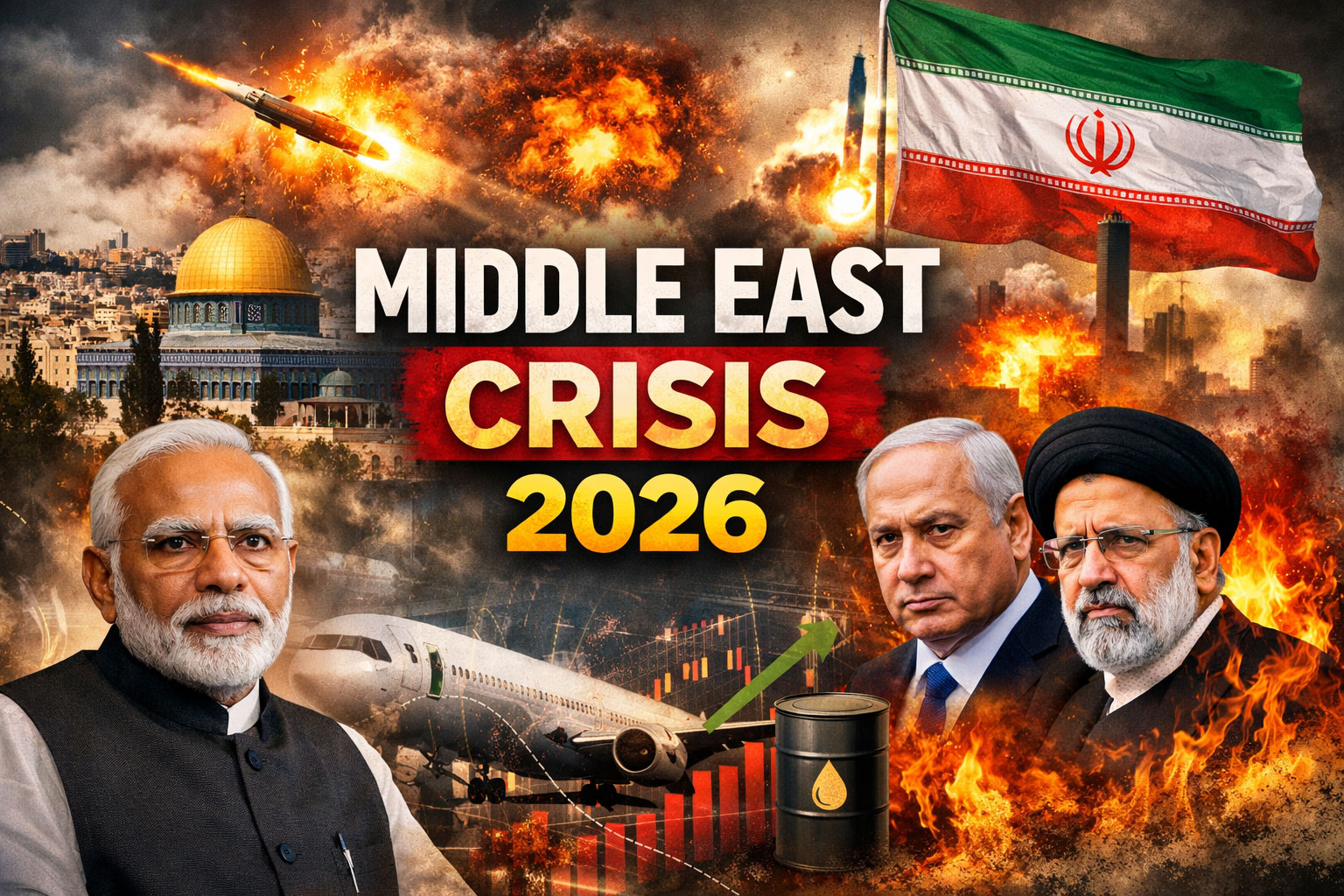
The Middle East Crisis 2026 has entered a dangerous phase as escalating tensions between Iran and Israel continue to unsettle global diplomacy and financial markets. With missile strikes, retaliatory operations, and rising geopolitical pressure, the situation is drawing international concern. World leaders are urging calm while citizens across the region brace for uncertainty.
India has stepped forward with a clear message — de-escalation and protection of civilians must remain the top priority.
India Calls for Immediate De-Escalation
As the Middle East Crisis 2026 deepens, Prime Minister Narendra Modi held high-level diplomatic discussions with leaders from Israel and the United Arab Emirates. India expressed serious concern over the safety of civilians and the stability of the Gulf region, where millions of Indian expatriates reside.
In an official statement, India emphasized:
“Dialogue and diplomacy are the only sustainable solutions. Protection of innocent lives must remain paramount.”
The government is also closely monitoring the safety of Indian nationals in affected regions. Helplines and embassy support systems have been activated to assist citizens if evacuation becomes necessary.
India’s balanced diplomatic approach reflects its strategic ties with multiple nations in West Asia while maintaining its long-standing foreign policy principle of peaceful resolution.
Global Leaders Urge Maximum Restraint
The Middle East Crisis 2026 has triggered urgent meetings among global powers. The European Union called for “maximum restraint” and respect for international law. The United States and other key players have engaged in backchannel diplomacy to prevent further escalation.
Analysts warn that any expansion of the conflict could destabilize neighboring countries and disrupt global trade routes. With military activity increasing along multiple borders, fears of a broader regional confrontation are growing.
International observers believe that the coming days will be critical in determining whether diplomacy can calm the situation or if tensions will intensify further.
Air Travel Disruptions and Economic Impact
One of the most immediate global effects of the Middle East Crisis 2026 has been widespread disruption to international air travel. Several major airlines have suspended or rerouted flights through key Gulf airspaces due to security concerns.
Thousands of passengers have faced delays and cancellations, especially on routes connecting Asia, Europe, and North America. Aviation authorities continue to reassess safety conditions daily.
Meanwhile, global markets are reacting sharply. Oil prices have surged amid fears of supply chain disruptions. Brent crude recorded a significant spike as investors responded to uncertainty in energy-producing regions.
Financial experts caution that prolonged instability linked to the Middle East Crisis 2026 could fuel inflationary pressures worldwide, affecting fuel prices, transportation costs, and commodity markets.
Impact on Indian Economy and Diaspora
India, being one of the largest importers of crude oil, is closely watching developments in the Middle East Crisis 2026. Rising oil prices could increase domestic fuel costs and impact inflation.
Additionally, millions of Indians work across Gulf nations. While there are currently no large-scale evacuation plans, authorities remain prepared should the security situation deteriorate. State governments are coordinating with the Ministry of External Affairs to ensure quick response mechanisms.
Economic analysts suggest that if tensions ease soon, markets may stabilize. However, prolonged uncertainty could affect trade balances and currency markets.
Rising Public Concern and Protests
Public reactions to the Middle East Crisis 2026 have been visible in various parts of the world. Demonstrations have taken place in multiple cities, with groups calling for peace and condemning military escalation.
Social media platforms are flooded with discussions, expert analysis, and humanitarian appeals. Many global citizens are urging leaders to prioritize diplomacy over conflict.
Security experts emphasize that misinformation can further inflame tensions, advising people to rely on verified news sources for updates.
What Happens Next?
The direction of the Middle East Crisis 2026 depends largely on diplomatic negotiations currently underway. International mediators are reportedly working behind the scenes to open channels of communication between the involved nations.
While military posturing continues, many experts believe that economic and humanitarian pressures could push leaders toward dialogue. The world is watching closely as decisions taken in the coming days may shape geopolitical dynamics for years to come.
For now, governments are focusing on civilian safety, economic stability, and diplomatic engagement.